User Generated Content

Hi everyone! It is finally time to pen down our thoughts for our last blog post for this course! This time around, I am going to be discussing about what user generated content is all about and why we should be concerned with it in the 21st century.

Well first off, we got to start with the definition. User generated content is being defined as any type of content that has been created and put out there by unpaid contributors or, using a better term, fans. It can come in the form of an advertisement, a newspaper, Facebook posts, tweets and even writing a blog post, which is what I am doing right now.

More often than not, media users produce their own content online as a means to earn some extra revenue as a form of livelihood. As we live in such a fast-paced world nowadays, user generated content is becoming more and more rampant. Because of this, many of us have very short attention span, which is why user generated content needs to be short and sweet, delivering the message as effectively as possible without boring the readers too much. To me personally, a user generated content to earn revenue is no different from someone who is doing a business outside. Both parties have to scan the market and find out from the consumers about their likes and dislikes, and find out what is the latest trend in order to stay competitive in this fast sand changing world.

In the 21st century, most of us if not all of us carry a smartphone or a laptop with us wherever we go, and check our online notifications every now and then. This is the best opportunity for users that generate their own content to convince and engage us in their content so as to convince us to buy their product or watch the advertisements through advertising.

Based on what I have learnt from the lecture on UGC taught by our lecturer, the user generated content needs to satisfy 5 important aspects. The 5 aspects are cognitive needs, affective needs, personal integrative needs, social integrative needs and tension release needs. To me personally, I feel that tension release needs rank the highest in terms of creating the most successful user generated content. This is especially true in Singapore’s context, where everything is so fast-paced and everyone and everything requires great efficiency and accuracy to carry out our daily tasks. This causes us to burn out very easily and get stressed. With the amount of stand up comedy shows on YouTube and various exciting TV shows like Netflix, the media is a good way to de-stress from our stressful lives, thereby satisfying the tension release needs.

OUR VERY OWN USER GENERATED CONTENT!
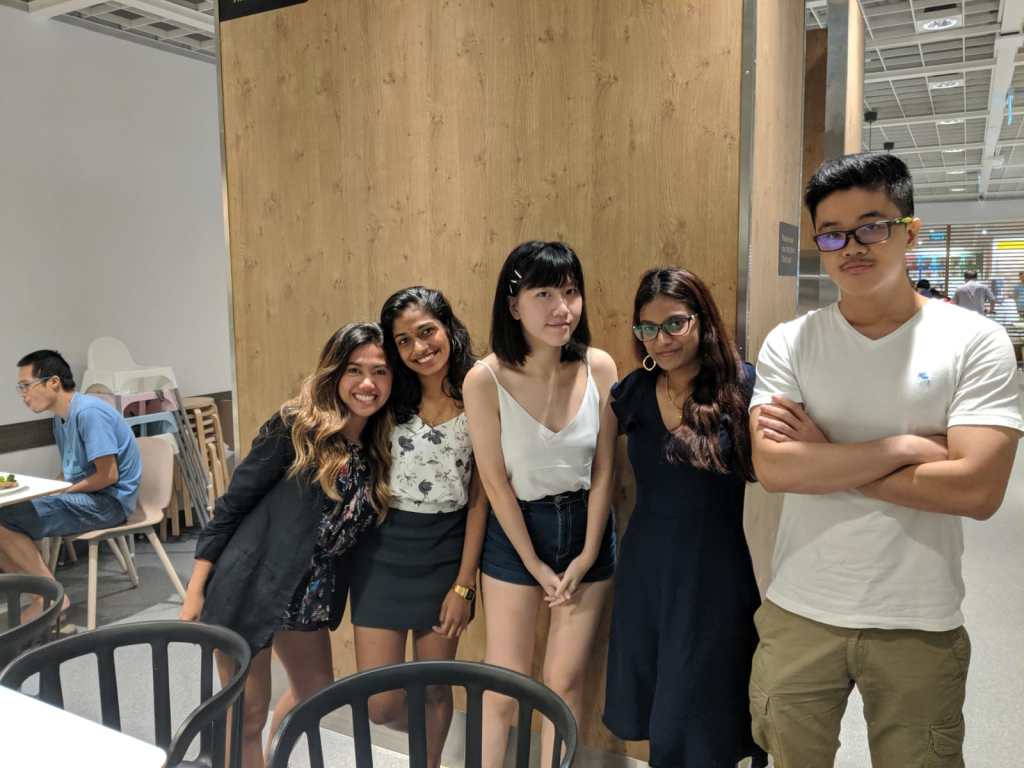
Our group photo after we have successfully done our video

My team and I decided to generate our own content on the topic of Feminism, particularly at the workplace. The purpose of this video is to highlight the importance of feminism and why women should stand up for themselves when they are being treated unfairly.

Hope you all will enjoy the video!

Our video showcasing the important aspects of the idea of feminism with a touch of humor in it

Feminism & the Mediated public sphere

Hey people! So glad that I can finally share my thoughts on what feminism is all about and the different degrees and aspects of this controversial topic.

Our group choose to discuss about the BIC advertisement shown below. This particular advertisement says that all women think like a man among other feminist traits in order to work like a boss. Our point of argument was why should women conform to what society or men tells them to do or think? Many women who are reading this pop-up advertisement would get pretty annoyed and frustrated because of this. Therefore, our group decided to go against this advertisement due to its mild stereotype against women.

In addition, this BIC advertisement created this advertisement to celebrate #HappyWomensDay. But in actual fact, they are actually going against the very fundamentals of what women’s day is all about. Therefore, instead of achieving that they originally planned to achieve, they created such an advertisement that is contradictory in terms of it’s content of the advertisement and the purpose.

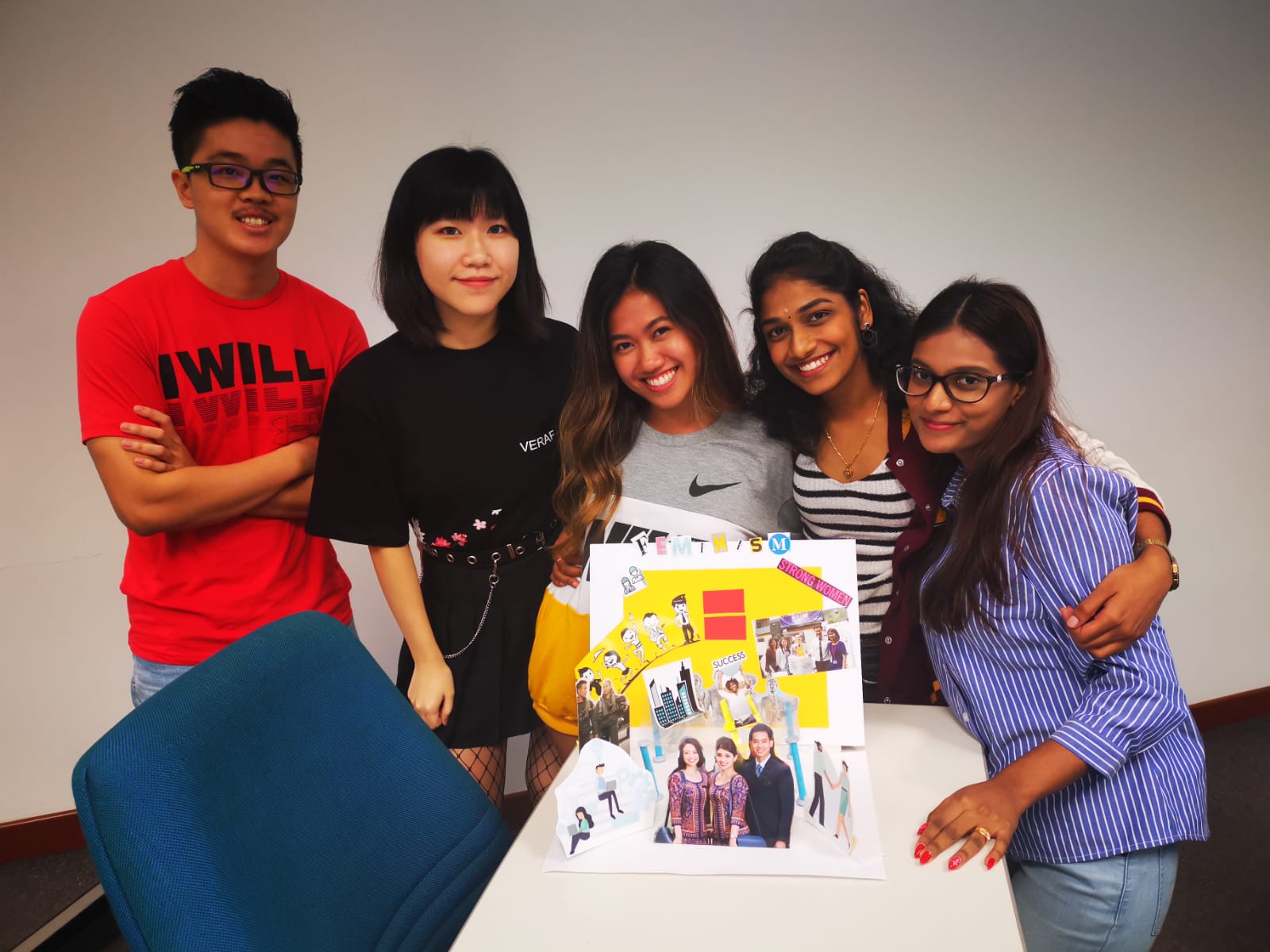
Me and my team members showcasing our poster on the empowerment of women through equal opportunities especially in the area of jobs.

A mediated public sphere is basically a concept where media users from all around the world can come together to discuss all kinds of issues together. This should be achieved where internet users can all live together in harmony without the use of hate, racist or stereotypical speech and so on.

In this day and age, more and more people are becoming more and more reliant on the media. We use the media to catch up on the latest news, listen to music, for entertainment purposes and so on. but little do we know that all these reliance on the media has become a necessity in our lives. It has shaped the way we think and how we perceive the world. Take for example the famous TV show called Family Guy. While it is a cartoon show meant for adults, many kids nowadays watch it, along with the subtle racism, violence, unethical behaviour and other bad influences this ‘innocent’ cartoon TV show has on these young minds. What they have learnt from all these shows, they will display certain if not all of the qualities of it in real life.

Another example would be the famous magazine that we all know as Playboy. Playboy magazine has always been known to produce magazines that contain a certain level of nudity in it. This has sparked a lot of controversial debate among many people, including the fact that even children and kids can get their hands on one, thus polluting their innocent minds. What really surprises me is the fact that most countries nowadays do not impose a law to restrict people below a certain age to be reading such magazines.

Whatever images or things that they read in this magazine will be absorbed into their memory, thereby altering their thinking and perception on the way of life.

Therefore, I feel that the mediated public sphere does indeed have a strong influence in shaping our minds and the way we think. This can be seen from the 2 examples that I have listed just now, and many more. Therefore, for avid media users like all of us, we should learn how to filter information and know what to accept and what not to.

References

https://www.debate.org/opinions/does-playboy-magazine-objectify-women

Does it matter who owns the media?

In our society today, many people rely on the media to get the latest news and keep up with the latest fashion trends and models. Media in our society today plays a big role in acting as the main method of mass communication. Some examples include newspapers, television news, magazines and the internet.

If the media gets taken over by a wrong group of people that twists facts to suit their agenda, then many readers will get false information, giving rise to the problem of fake news. I feel that fake news exists in both government owned and private owned media, and it is of prime importance that we as active media users get as much people to learn about the existence and the threat of fake news, and how to differentiate between them. People of the world regardless of race, language or religion should have the rights to access true and accurate media and news reports from all around the world, to better understand the world and increase our knowledge on current affairs so as to make better judgements on political and social issues.

In the case of a government owned media, they tend to be more bias in their writing, only having the country’s interests at heart. They would also try to garner the support of the citizens through the media to encourage cohesiveness of the people in the country through ample motivation. However, the government might sometimes try to omit certain portions of the media if that particular piece of information threatens their position of power or their interests. I feel that this is the only viable drawback of a government owned media. Even if the piece of news is not favourable to the government, citizens of the country deserve to have the most real picture of the actual news that is occurring.

As a matter of fact, the government in certain countries even make use of the media to spread political propaganda, just so they can have more control over the entire state or country. Therefore, the more control they have over the media, the more they can brainwash the citizens of the country by omitting certain important facts in the media, leading to undesirable outcomes.

In the case of a privately owned media,  media reports tend to be more neutral as they will report the most accurate news possible, regardless of how absurd the piece of news is. This is because they have no hidden agenda when controlling the media.

Therefore, I feel that both government owned media and privately owned media has their pros and cons. I believe that as long as a country has a fair balance of a government owned media and private owned media, it should be fine. That way, people will be given the freedom to choose what type of news platform they want to read from. In conclusion, I feel that it does not matter who owns the media. As long as we as avid media users know how to properly fish out true and accurate news from the media, it should be fine.

The ‘Uses and gratifications’ research

The ‘uses and gratifications’ research talks about how people make use of the media to achieve their own personal agenda, instead of how the media influences people.

Individuals that have a certain degree of power over the media often make use of the media to make their lives better, be it using it for relaxation, entertainment or work.

The researchers of ‘uses and gratifications’ often look at various examples of how people make use of the media to achieve their own personal goals. Some examples would include advertising for their own product on the web through pop-up advertisements and online newspapers. Some would write journals or essays online on modern contemporary issues to bring across their intended message to the audience. More often than not, the readers who are using the media will understand and support their cause or purpose if the intention does not go against their moral values and ideas.

What is interesting is that this theory happens to be the complete opposite of the ‘magic bullet theory’ (which is what we discussed in class recently).  This theory invokes a certain type of response from the audience (uses and gratification theory), as compared to having a passive audience (magic bullet theory).

Some examples could include media users going into the media to find inspirational quotes just to boost their self-esteem, to make themselves feel much better. But the media can also pose a threat to users in the sense that they would follow the world standards of beauty blindly, leading to various mental conditions such as Anorexia Nervosa and Bulimia Nervosa. After seeing their favourite model being so thin and ‘perfect’, their minds will be adversely affected, causing them to starve themselves or lose weight through unethical means just to achieve their desired result.

However, the research on ‘uses and gratifications’ does have it’s flaws. More often than not, the satisfaction that people get from the media relies on how the person intends on conveying the hidden message to the intended audience and how convincing he is. Moreover, audiences of different age groups will have different responses to the message that is being brought across by the person making use of the media.

As the saying goes ‘a picture tells a thousand words’. Often times, ‘lobby groups’ upload many pictures on the internet with a hidden meaning encoded within them to bring across the hidden message to the audience. one example of this could be the use of various cartoons that highlights the importance of healthy exercise to the society. This causes media users to dwell upon what they have read and question their life choices, leading them to changing them.

Therefore, I feel that although there are many cases of the ‘uses and gratification’ theory being true to their cause, the ‘magic bullet’ theory does have it’s successes too. As long as people know how to differentiate between a beneficial piece of media source that benefits their overall well-being and vice versa, then media will become a good tool to all of mankind.

What is wrong with the media effects model?

The media effect model basically talks about the effect of how media shapes our thinking and the way we perceive things in various ways through advertisements, online news and so on. In this day and age, people are so hooked on to the social media that we tend to believe the facts that are presented to us without actually counter-checking to see if the data is really true or not.

The media effects model tends to cater more to the intellectuals because they are the ones that would be able to come up with strong points on what they are trying to write. Those who are not so academically inclined will tend to not be able to discern between a sound and logical argument on the media and vice versa.

The media effects model tends to be biased when presenting it’s data. It is very hard to find an article or journal that is not biased. Most of the time writers have to state their stand at the beginning of their writing to let the readers have a clear idea of what is being written. Some of the facts presented might not necessarily be backed up with evidence (opinion), which will then cause us to question the validity and reliability of the source.

This can be further elaborated on the fact that online writers might choose to leave out certain parts of the evidence in the text which they deem as not important in order to make their work look more convincing and appealing. This causes us readers to have a skewered view of the actually events that happened in real life. 

In conclusion, I feel that the media effects model does certainly have an effect on society today. Depending on the type and nature of the source presented and how strong the writer manages to convince the readers of his point of view, people can get swayed into believing what is being written.

These are some of the interesting questions to ask about the role of media today, in shaping of mass opinion:

  1. What can we do to ensure that the different media sources such as articles etc. can be neutral in their stand/ unbiased so as to provide the readers the clearest picture of what happened on the topic?
  2. What is the main difference between an opinion and real evidence in the media today?
  3. What is the role of media in a democratic society such as Singapore?
  4. What can we do to allow us to look out and discern between real news and fake news?
  5. How does the media affect our daily lives both positively and negatively?

First Blog Post for BCM110

Hello everyone! My name is Sean Lim and I am so excited about finding out a little more about what BCM110 has to offer me this semester.


I was studying in Hwa Chong International School from 2015 – 2016 and graduated with an IB diploma 3 years ago in 2016. It was not an easy route for me and I was met with a lot of difficulties and trials throughout my course of study there.
I chose to major in Psychology from the university of Wollongong because I really have a passion to find out more about myself and why certain people react in a certain way when faced with crisis and situations.
Since young I was always intrigued by how psychologists work and how they always seem to manage to calm patients down and make them feel much better without any medication. As I grew older I realised it involves a lot of effort and therapy sessions that makes them feel better.
As such I have decided to do this course and find out more about how and why psychologists become so good at their field, especially psychologists like Sigmund Freud etc.
I was studying in Hwa Chong International School from 2015 – 2016 and graduated with an IB diploma 3 years ago in 2016. It was not an easy route for me and I was met with a lot of difficulties and trials throughout my course of study there.
I chose to major in Psychology from the university of Wollongong because I really have a passion to find out more about myself and why certain people react in a certain way when faced with crisis and situations.
Since young I was always intrigued by how psychologists work and how they always seem to manage to calm patients down and make them feel much better without any medication. As I grew older I realised it involves a lot of effort and therapy sessions that makes them feel better.
As such I have decided to do this course and find out more about how and why psychologists become so good at their field, especially psychologists like Sigmund Freud etc.

Design a site like this with WordPress.com
Get started